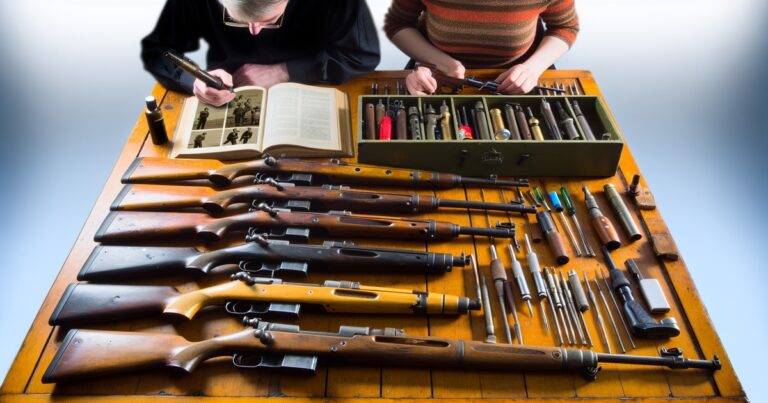
Ballistics Analysis: The Crucial Role in Firearms Examination
-
Utilization and Admissibility of Ballistic Evidence in Court
Ballistics analysis, a crucial aspect of forensic investigation and military operations, delves into unraveling the intricate dynamics of projectile motion. From determining the trajectory of a bullet to understanding its impact on various surfaces, this field plays a pivotal role in solving crimes and enhancing weapon effectiveness. The science of ballistics has evolved through history, shaping our understanding of projectiles’ behavior.
Exploring its historical significance and modern-day applications, scientists utilize mathematical principles and cutting-edge technology to decode the mysteries behind projectile trajectories. Join us as we dissect the science that underpins firearm examinations and crime scene reconstructions while shedding light on its indispensable role in contemporary law enforcement practices.
Key Takeaways
- Understanding firearms examination techniques is crucial for forensic experts and law enforcement to accurately analyze ballistic evidence and support criminal investigations.
- Ballistics identification statistics play a significant role in establishing the uniqueness and individuality of firearms, contributing to the reliability of forensic evidence in court.
- Forensic topography in bullet and cartridge examination provides valuable insights into the trajectory and origin of fired projectiles, aiding in crime scene reconstruction and suspect identification.
- Utilizing firearm tracing methods is essential for tracking the history and ownership of firearms involved in criminal activities, facilitating the apprehension of perpetrators and the prevention of future incidents.
- Serial number restoration is an important process in forensic ballistics, as it helps trace the origin and ownership of firearms used in criminal acts, enhancing the accountability of individuals involved.
- Admissibility of ballistic evidence in court requires adherence to established standards and procedures to ensure its reliability and relevance in legal proceedings, emphasizing the need for accuracy and transparency in forensic practices.
The Crucial Role of Firearms Examination Techniques
Importance in Criminal Investigations
Firearms examination, also known as ballistics analysis, plays a crucial role in criminal investigations. It helps law enforcement agencies link guns to crime scenes and identify potential suspects through ballistics matching. By analyzing bullets, cartridge cases, and other firearm-related evidence, experts can provide valuable insights into the circumstances surrounding a shooting incident.
Moreover, firearms examination techniques are essential for determining the type of weapon used in a crime. This information is invaluable for building a case against perpetrators and ensuring that justice is served in courts. Without ballistics analysis, it would be significantly more challenging to establish connections between firearms and criminal activities.
Microscopy and Chemical Analysis
Microscopy and chemical analysis are integral components of firearms examination. Microscopic examinations allow experts to scrutinize the unique markings left on bullets and cartridge cases when fired from a specific gun. These markings serve as “fingerprints” that can be compared to those found at crime scenes or on recovered evidence.
Furthermore, chemical analysis techniques enable examiners to identify traces of gunshot residue (GSR) on individuals or objects linked to shooting incidents. GSR consists of particles expelled from a firearm upon discharge and can provide critical evidence regarding proximity to the firing of a weapon.
For instance:
- Microscopic analysis helped investigators match bullet striations found at different crime scenes with those from an arrested suspect’s gun.
- Chemical analysis revealed gunshot residue on clothing worn by an individual suspected of involvement in a shooting.
Linking Firearms to Crime Scenes
By leveraging advanced ballistics analysis techniques, law enforcement agencies can effectively link firearms used in crimes to specific locations or events. This involves meticulous forensic firearms studies review processes conducted by highly trained experts who possess proficiency testing qualifications.
Proper study protocols ensure that all findings undergo rigorous verification processes before being presented as evidence in court proceedings. Through comprehensive science research efforts backed by extensive tests involving human subjects’ work scenarios, examiners demonstrate their competence in accurately linking bullets with criminal activities through elimination methods.
Ballistics Identification Statistics and Their Significance
Statistical Analysis
Ballistics identification involves the use of statistical algorithms to match ballistic evidence to specific firearms. These algorithms consider both class characteristics (common features shared by a group of firearms) and individual characteristics (unique markings on a particular firearm). By employing statistical methods such as likelihood ratios and estimates, experts can determine the likelihood of a match between recovered bullets or cartridge cases and a suspected weapon.
Statistical analysis also allows for the calculation of confidence intervals, providing a range within which the true value is likely to fall. This helps forensic examiners convey the degree of certainty associated with their findings, enhancing transparency in court proceedings. Moreover, these statistical techniques play an essential role in minimizing errors related to item nonresponse or unit nonresponse during ballistics examinations.
Significance of Matching Ballistic Evidence
Matching ballistic evidence to firearms through statistical analysis holds immense significance in criminal investigations. It not only aids law enforcement agencies in identifying suspects but also plays a crucial role in linking separate crime scenes together based on common weapons used. For instance, if two seemingly unrelated crimes share similar ballistic evidence, it could indicate that they were committed using the same firearm.
Matching ballistic evidence and error rates provide critical support for witness testimonies and other forms of circumstantial evidence. This strengthens the overall case against an alleged perpetrator by corroborating different aspects of the investigation. Furthermore, statistics derived from ballistics identification can help establish patterns related to specific types of firearms used in criminal activities.
Case Examples Demonstrating Importance
Several real-life cases underscore the importance of ballistics identification statistics in solving crimes. In one instance, matching bullet fragments recovered from different crime scenes led investigators to link multiple homicides that were previously thought to be unrelated. Through rigorous statistical analysis, forensic experts were able to attribute all incidents to a single firearm, ultimately leading to the apprehension and conviction of the perpetrator.
Another compelling example involves utilizing confidence intervals derived from ballistics identification statistics during trial proceedings. By presenting these intervals alongside expert testimony regarding matched ballistic evidence found at crime scenes and study, prosecutors can effectively communicate the strength and reliability of forensic findings to judges and juries.
Forensic Topography in Bullet and Cartridge Examination
Analyzing Bullet Trajectory
Forensic experts use ballistics analysis to study the path of a bullet from the moment it leaves the firearm until it reaches its target. By studying the trajectory, investigators can determine crucial details such as the angle of impact, range, and point of origin. This information is vital for reconstructing crime scenes and understanding how events unfolded. Utilizing forensic studies, analysts can piece together evidence by examining factors like bullet entry and exit wounds, as well as any objects or surfaces affected along the trajectory.
When analyzing a specific bullet’s path, forensic topography involves considering various elements such as environmental conditions, surface materials at the scene, and any obstructions encountered by the projectile. For instance, if a bullet passes through glass before hitting its target, distinctive marks left on both sides of the glass can provide valuable insights into its trajectory. Moreover, evaluating these aspects enables investigators to recreate scenarios accurately based on ground truth evidence found at crime scenes.
Importance of Cartridge Markings
In addition to studying bullets’ paths, examining markings on cartridge cases plays a pivotal role in forensic investigations. When firearms are discharged, they leave unique patterns on cartridge casings due to their interaction with specific components within the gun barrel. These microscopic marks act as “fingerprints” that help match spent cartridges to individual firearms – an essential aspect known as pattern matching.
By scrutinizing these minute details using specialized tools and techniques such as comparison microscopes or other imaging systems designed for toolmark examinations,forensic expertscan link recovered cartridge cases to particular weapons with high precision. This process not only aids in identifying firearms used in crimes but also contributes significantly to establishing connections between different incidents through ballistic fingerprinting.
Case Studies Highlighting Forensic Topography
Several real-life examples demonstrate how forensic topography has been instrumental in solving criminal cases worldwide. In one case study involving a shooting incident inside a vehicle where multiple rounds were fired at close range resulting in fatalities,the meticulous examination of ballistic trajectories helped reconstruct events precisely.This reconstruction enabled authorities to ascertain critical details about shooter positions,directions,and sequences of shots fired—crucial information that ultimately led to resolving discrepancies among witness testimonies.
Firearm Tracing Methods in Criminal Investigations
Utilization of Databases
Law enforcement agencies utilize databases to trace the origin and ownership of firearms used in crimes. These databases contain crucial information about firearm purchases, transfers, and registrations. When a firearm is recovered from a crime scene, investigators can use these databases to track down its history. For instance, if a suspect is found with a firearm at a crime scene, law enforcement can trace the weapon back to its original owner through these databases.
Collaboration between different law enforcement agencies plays an essential role in firearm tracing. By sharing information and coordinating efforts, agencies can effectively track firearms involved in criminal activities across different jurisdictions. This collaboration allows for comprehensive investigations that transcend local boundaries and help uncover patterns related to firearms trafficking and illegal gun possession.
Impact on Solving Criminal Cases
The impact of firearm tracing on solving criminal cases cannot be overstated. By identifying the source of firearms used in crimes, law enforcement gains valuable insights into potential suspects or networks involved in illicit activities such as arms smuggling or organized crime. This process not only aids in apprehending individual perpetrators but also dismantling larger criminal operations.
Firearm tracing also contributes significantly to building strong legal cases against suspects by establishing concrete links between them and the weapons used during criminal acts. For example, if a suspect denies involvement in a shooting incident but forensic firearms studies conclusively link them to the recovered weapon through ballistics analysis, it provides irrefutable evidence for prosecution.
Serial Number Restoration and Its Importance
Techniques for Restoration
Firearms often have their serial numbers intentionally removed or tampered with. However, through chemical restoration, these obliterated serial numbers can be recovered. This involves using specific chemicals to reveal the original number underneath the altered surface.
Restoration techniques also include physical methods like metal engraving or mechanical stamping to recreate the serial number on a firearm. These processes are crucial in cases where identifying weapons used in crimes is essential.
Significance of Identification
The significance of restoring serial numbers lies in its role in law enforcement investigations. When firearms are used in criminal activities, tracing them back to their owners becomes vital. Restored serial numbers provide law enforcement agencies with a way to link a weapon found at a crime scene back to its owner.
Moreover, restored serial numbers play an essential part in tracking down illegal gun trafficking operations by connecting firearms seized from criminals with their origins.
Legal Implications and Challenges
Despite the critical importance of restored serial numbers for law enforcement, there are legal implications and challenges associated with this practice. In some jurisdictions, altering or restoring a firearm’s serial number without proper authorization is considered illegal.
Furthermore, challenges arise when attempting to use restored numbers as evidence due to potential doubts about their authenticity during legal proceedings.
Utilization and Admissibility of Ballistic Evidence in Court
Presentation of Ballistic Evidence
Ballistic evidence, such as casings or bullets, is presented in court to support a case. This evidence can help establish the type of firearm used, linking it to a crime. Forensic experts analyze these items to provide critical information.
In cases involving firearms, presenting ballistic evidence can be crucial for establishing key details about the weapon used. For instance, if a bullet found at a crime scene matches the markings on a recovered firearm, this could directly link the weapon to the crime.
Admissibility Criteria
Before being presented in court proceedings, ballistic evidence must meet certain admissibility criteria. The legal system requires that evidence meets an objective basis for admission. This means that it must be based on reliable principles and methods.
The admissibility of ballistic evidence depends on whether it meets specific standards set by courts. For example, some jurisdictions require that forensic experts demonstrate their ability to accurately match casings or bullets to a particular firearm through rigorous testing and validation processes.
Role of Forensic Experts
Forensic experts play a pivotal role as witnesses when presenting ballistic evidence in court proceedings. They are responsible for explaining their analysis and findings in an understandable manner for judges and juries who may not have technical knowledge about ballistics.
These experts testify about their examination results regarding firearms-related matters like tool marks left on casings or bullets after firing from a gun. Their testimony helps judges and juries understand how they arrived at their conclusions based on scientific analysis rather than speculation.
Reliability and Limitations of Forensic Ballistics Evidence
Factors Affecting Reliability
Forensic ballistics analysis is generally considered reliable, but several factors can affect its accuracy. The condition of the forensic evidence and the quality of the recovered bullets or casings play a crucial role in determining reliability. The expertise and experience of the forensic examiner conducting the analysis significantly influence the reliability of ballistic findings. Without proper training and knowledge, there’s a higher risk of errors in interpreting ballistic evidence.
Furthermore, maintaining a representative sample database is essential for accurate comparisons during forensic ballistics analysis. This ensures that recovered bullets or casings can be matched against a diverse range of firearms to increase confidence in identifying potential matches accurately.
Challenges in Interpreting Ballistic Findings
One significant challenge in interpreting ballistic findings lies in dealing with inconclusive decisions due to various reasons such as damaged or distorted forensic evidence, insufficient markings on bullets, or limited comparison samples available for analysis. These limitations can lead to potential error rates if not handled carefully.
Moreover, misconceptions about what forensic ballistics evidence can actually prove often arise among law enforcement officers, legal professionals, and even jurors. It’s important to understand that while forensic ballistics provides valuable information about firearms-related incidents, it does not always definitively link specific ammunition to a particular firearm without any doubt.
To ensure accuracy and avoid misconceptions in forensic ballistics analysis, it’s crucial for experts involved to transparently communicate both positive associations between crime scene evidence and test-fired ammunition as well as instances where no definitive conclusions can be drawn from the examination results.
Impact of Automated Ballistics Technology on Forensics
Advancements in Technology
Forensic ballistics analysis has greatly benefited from advancements in automated technology. These innovations have revolutionized the field by streamlining processes that were once time-consuming and labor-intensive. Automated systems now allow for the rapid examination of ballistic evidence, such as spent cartridge casings and bullets, significantly reducing the time required to analyze these critical pieces of evidence.
The use of automated technology has also led to a marked increase in the accuracy of ballistics analysis. By employing sophisticated algorithms and image processing techniques, these systems can identify unique markings on ammunition with a level of precision that surpasses human capabilities. This enhanced accuracy is crucial in criminal investigations where even the smallest details can make a significant difference.
Automated ballistics technology not only expedites the analysis process but also ensures that results are reliable and consistent across different cases. In addition to speed and accuracy, these advancements have also improved overall efficiency within forensic laboratories.
Integration into Forensic Laboratories
The integration of automated systems into forensic laboratories has had a profound impact on operational workflows. Previously, technicians relied heavily on manual methods for comparing ballistic evidence, which often resulted in lengthy turnaround times for case resolutions. With automated technologies now at their disposal, forensic analysts can process large volumes of ballistic evidence more efficiently than ever before.
Moreover, by automating repetitive tasks involved in ballistics analysis, forensic laboratories can reallocate human resources to more complex aspects of casework while maintaining high levels of productivity. This shift allows experts to focus on interpreting results rather than spending extensive hours conducting routine examinations.
In practical terms, this means that law enforcement agencies benefit from faster turnaround times for analyzing firearm-related evidence while gaining access to more detailed findings due to enhanced technological capabilities.
The Shift to 3D Imaging in Ballistics Comparison
Enhanced Precision
Ballistics analysis has experienced a significant transformation with the adoption of 3D imaging technology. Unlike traditional 2D comparisons, this advanced method offers enhanced accuracy and detail, allowing forensic experts to make more precise determinations. By utilizing virtual microscopy and comparing virtual images, analysts can now delve deeper into the intricacies of ballistics matching.
The shift from 2D to 3D imaging has provided an entirely new perspective for scientists in the field of ballistics analysis. This evolution has not only improved the objectivity of the process but also opened up possibilities for more comprehensive examinations. With these advancements, forensic experts can conduct blind studies and achieve results that are even more scientifically sound.
The introduction of 3D imaging technology into ballistics comparison has revolutionized how evidence is examined at crime scenes. For instance, when analyzing bullets or cartridge cases found at a scene, investigators can now utilize virtual comparison techniques to identify unique markings left by firearms. This level of precision was previously unattainable with traditional methods.
Future Implications
Looking ahead, it’s clear that this technological leap will continue to shape the future of ballistics analysis. As virtual comparisons become standard practice within the scientific community, we can expect further advancements in DNA profiling and other related fields as well.
In addition to enhancing current practices within forensics labs, these developments could have far-reaching implications for criminal investigations worldwide. The ability to conduct objective analyses using 3D imaging creates opportunities for conclusive findings that were once considered unattainable.
Final Remarks
You’ve now delved into the intricate world of forensic ballistics, uncovering the pivotal role of firearms examination techniques, the significance of ballistics identification statistics, and the impact of automated ballistics technology on forensics. As you navigate through the complexities of bullet and cartridge examination, firearm tracing methods, and 3D imaging in ballistics comparison, it’s clear that forensic ballistics plays a crucial part in criminal investigations and court proceedings. Understanding the reliability and limitations of ballistic evidence is essential, as is recognizing the importance of serial number restoration. So, whether you’re a budding forensic enthusiast or simply intrigued by the world of crime-solving, keep exploring the fascinating realm of forensic ballistics – there’s always more to uncover!
Frequently Asked Questions
What is the significance of ballistics analysis in forensic investigations?
Ballistics analysis plays a crucial role in forensic investigations by providing valuable evidence to link firearms, bullets, and cartridges to criminal activities. It helps in identifying weapons used in crimes and contributes to solving cases.
How does automated ballistics technology impact forensics?
Automated ballistics technology significantly enhances the efficiency and accuracy of analyzing ballistic evidence. It streamlines the process of matching bullets and cartridge casings, leading to quicker identification of potential suspects or connections between different crime scenes.
What are the limitations of forensic ballistics evidence?
Forensic ballistics evidence has limitations related to factors such as environmental conditions affecting bullet trajectories, variations in ammunition manufacturing, and human error during examination. These limitations emphasize the importance of considering multiple forms of evidence in criminal investigations.
Why is serial number restoration important in firearm examinations?
Serial number restoration is vital because it enables investigators to trace the ownership history of firearms involved in crimes. By recovering obliterated serial numbers, law enforcement can establish crucial links between weapons used unlawfully and their legal owners.
How does 3D imaging benefit ballistics comparison?
The shift to 3D imaging provides enhanced visualization for comparing ballistic markings on bullets and cartridge cases. This advanced technique offers detailed insights into surface topography, aiding examiners in making more precise identifications and associations within forensic investigations.